

Our approach
The science of
your rhythm
Everything we make starts from one fact: your body runs on a 24-hour clock, and light is how you set it. Here is the science — and the research behind every claim.
We would rather show you the evidence than sell you a promise. Below is how the circadian system actually works, what it needs across the day, and exactly how strong the science is behind each of our products.
About 16 hours awake · 8 hours asleep — one long day, one consolidated night
01 / The clock
You run on a 24-hour clock
Deep in the brain, a master clock called the suprachiasmatic nucleus keeps your whole body on a daily cycle. In tightly controlled studies, its natural period averages about 24.2 hours — remarkably precise.1
That clock, working with your build-up of sleep pressure, is what shapes the familiar pattern of roughly 16 hours awake and 8 asleep — letting you stay alert in one long stretch and sleep in one consolidated block.2
02 / The switch
Light is the master switch
Of everything that keeps your clock aligned to the day, light is the most powerful — a stronger daily synchroniser than meal timing or exercise.3
Your eye carries a dedicated light-sensing pigment, melanopsin, not in the rods and cones you see with, but in a special class of inner-retina cells.4 These cells respond to light entirely on their own5 and wire directly to the master clock — a private line carrying “how bright is it?” straight to your body’s timekeeper.6
Well-established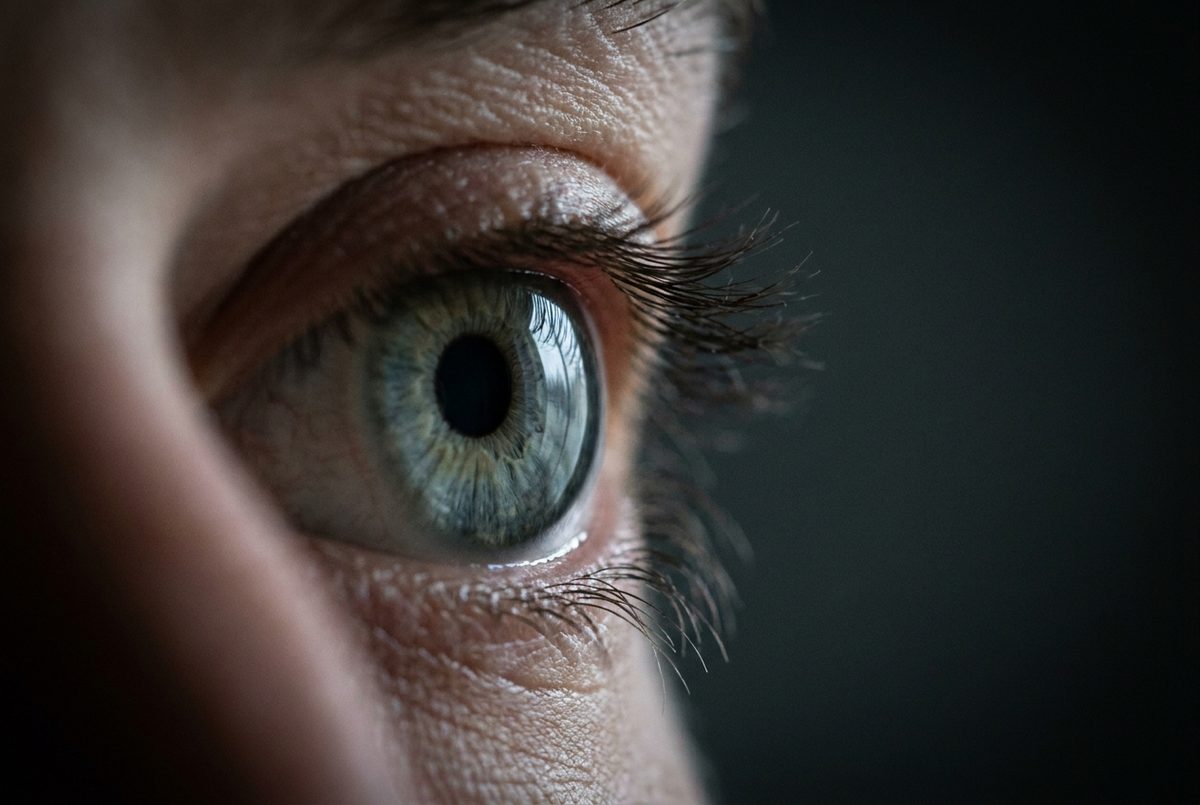
03 / Morning
Set the clock: bright & cool
Bright light in the morning nudges your clock a little earlier and anchors it to the day.7 That morning setting is what times your body’s natural evening rise in melatonin, a dozen-plus hours later — so a well-lit morning helps you wind down on schedule at night.8
In a workweek study, a bright morning left people more alert and less groggy, with more efficient nights’ sleep.9 People with more day light and less night light also report better mood.10
Aurelia’s circadian lamp is built for exactly this: bright, cool morning light at your desk or mirror.
Well-established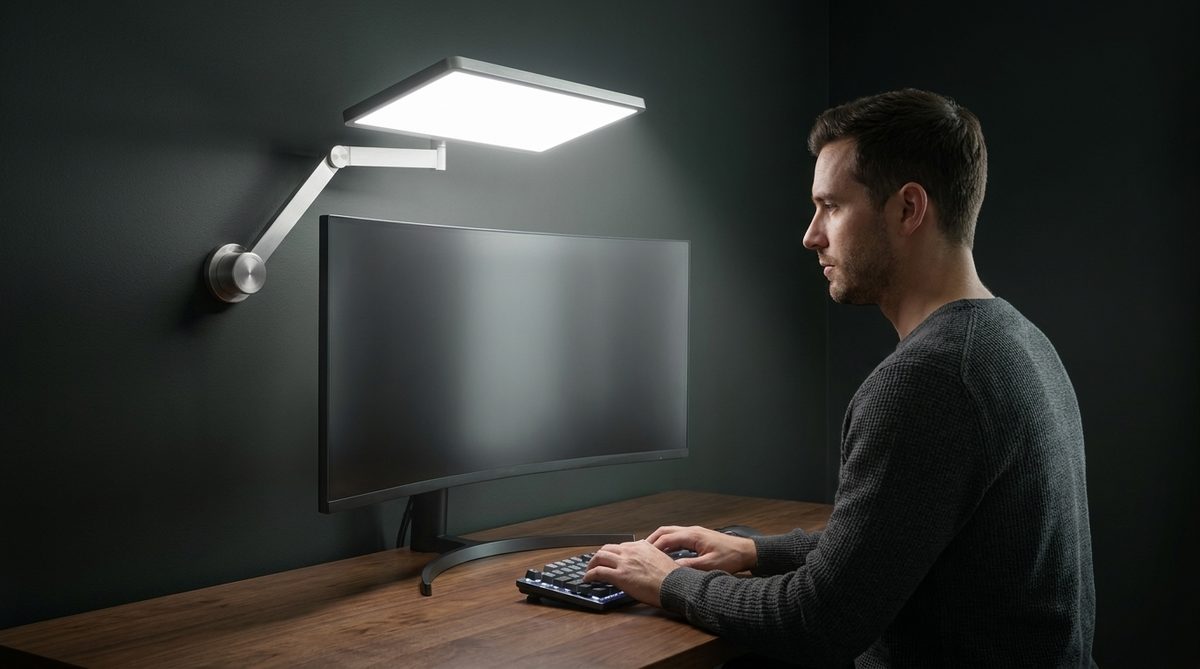
04 / The numbers
How much light, and when
In 2022, a panel of the world’s leading circadian scientists published clear targets for indoor light — measured in melanopic EDI, the unit set by the international CIE S 026 standard for how much your body clock actually “sees.”11,12
Ordinary indoor light is far dimmer than daylight — dark winter mornings and windowless offices routinely miss the daytime target.11
05 / Evening
Wind down: dim & warm
Ordinary room light in the hours before bed pushes back your natural melatonin rise and shrinks the window for restful sleep.13 Reading on a bright, blue-lit screen makes it take longer to fall asleep and blunts next-morning alertness.14
This is why our lamp shifts to a dim, warm evening mode. On amber blue-blocking glasses, we are honest: an early study saw a modest gain of about 28 minutes more sleep15, while the largest evidence review to date finds the broader case for blue-light glasses still unresolved.16
Evening light: established · glasses: emerging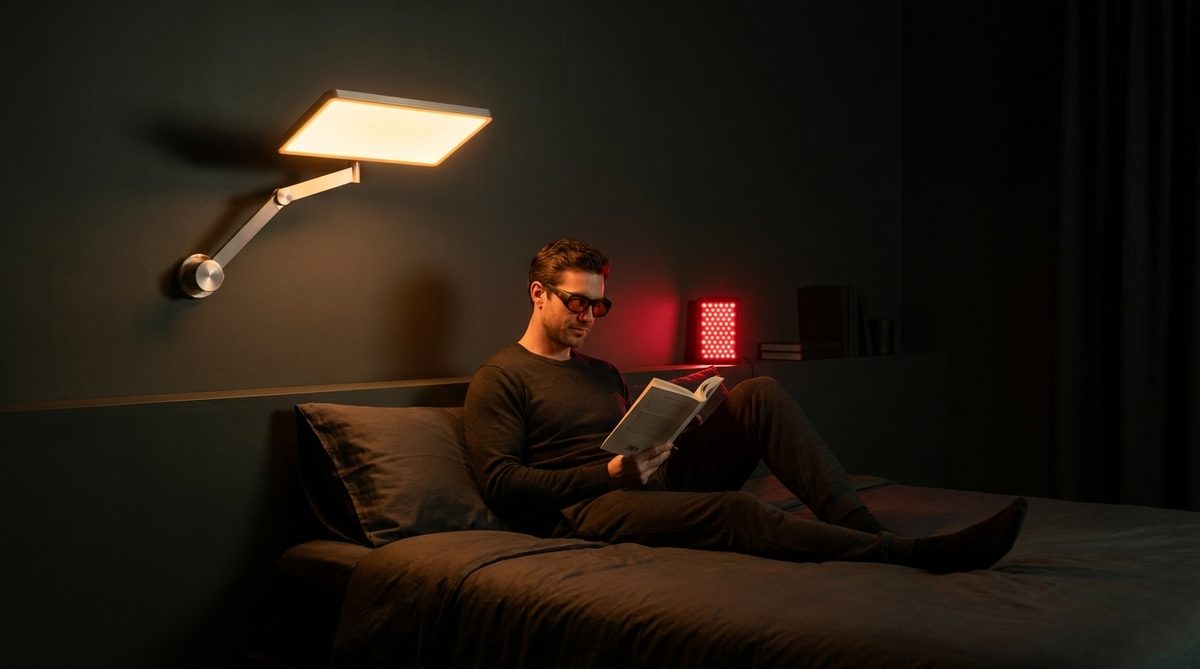
06 / Night
Sleep: dark, quiet, cool
Dark. Even a moderate light left on overnight was linked to a higher heart rate and reduced next-morning insulin sensitivity — the body handled a glucose challenge less efficiently.17 A true blackout matters.
Quiet. Night-time noise fragments sleep as sound peaks rise18; in noisy settings, earplugs and an eye mask measurably improved how people slept.19
Cool. Falling asleep depends on your core temperature drifting down, so a cooler surface and room ease you into sleep20; a warm bath 1–2 hours before bed speeds this along.21
Well-established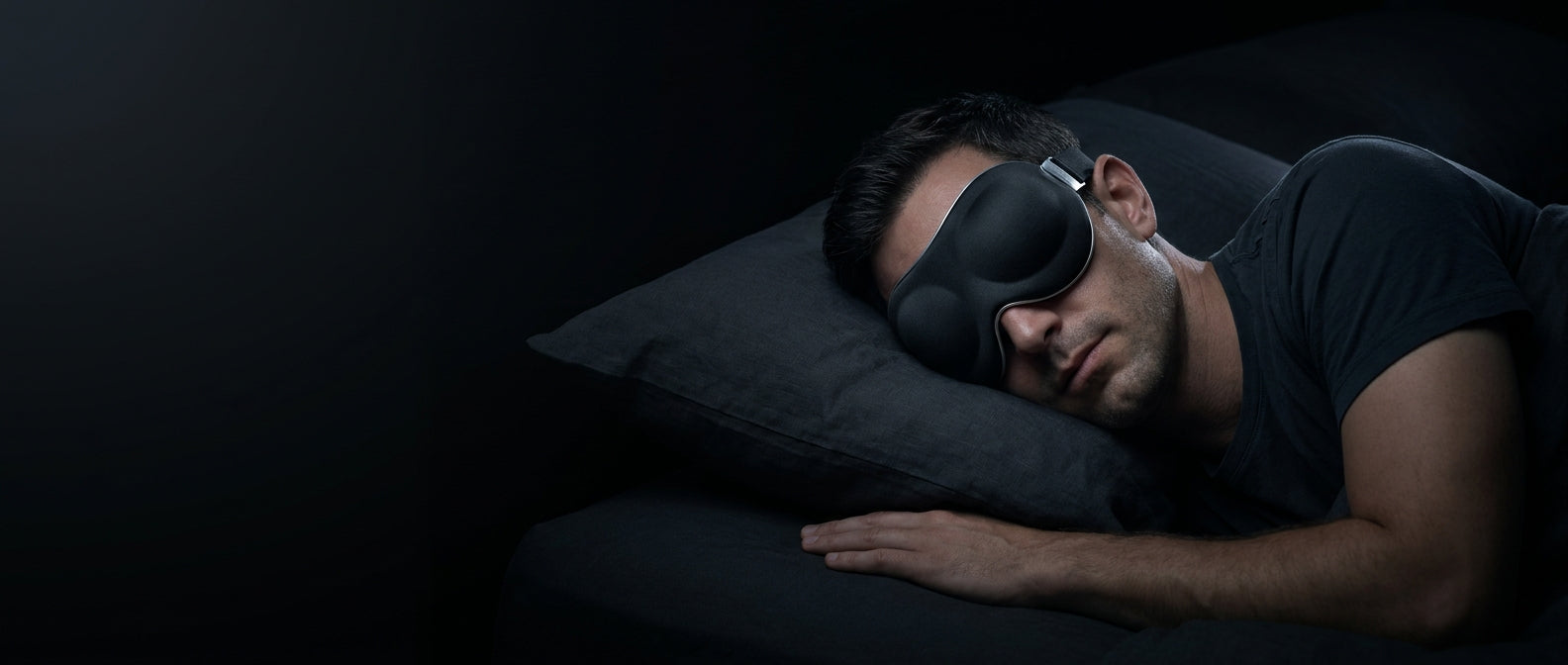
07 / The system
How each product maps to the evidence
We grade our own products. Where the science is strong we say so — and where it is still early, we say that too.
| Product | What it’s for | Evidence |
|---|---|---|
| Circadian Lamp · cool mode | Bright morning light to set the clock | Well-established |
| Circadian Lamp · warm mode | Dim, warm evening light | Well-established |
| Blackout Mask | Near-total darkness for sleep | Well-established |
| Sleep Earplugs | Reduce sleep-fragmenting noise | Well-established |
| Cooling Pillow | Help core temperature drop | Well-established |
| Night Glasses | Cut bright, blue evening light | Emerging |
| Red Light Panel | Recovery & wellbeing | Emerging |
References
Peer-reviewed sources, most recent research prioritised. Aurelia products are general wellness devices, not medical devices, and are not intended to diagnose, treat, cure or prevent any disease.
- Czeisler CA, Duffy JF, Shanahan TL, et al. Stability, precision, and near-24-hour period of the human circadian pacemaker. Science. 1999. doi:10.1126/science.284.5423.2177
- Dijk DJ, Czeisler CA. Contribution of the circadian pacemaker and the sleep homeostat to sleep propensity, sleep structure… The Journal of Neuroscience. 1995. doi:10.1523/JNEUROSCI.15-05-03526.1995
- Duffy JF, Wright KP Jr. Entrainment of the human circadian system by light. Journal of Biological Rhythms. 2005. doi:10.1177/0748730405277983
- Provencio I, Rodriguez IR, Jiang G, et al. A novel human opsin in the inner retina. The Journal of Neuroscience. 2000. doi:10.1523/JNEUROSCI.20-02-00600.2000
- Berson DM, Dunn FA, Takao M. Phototransduction by retinal ganglion cells that set the circadian clock. Science. 2002. doi:10.1126/science.1067262
- Hattar S, Liao HW, Takao M, Berson DM, Yau KW. Melanopsin-containing retinal ganglion cells: architecture, projections, and intrinsic photosensitivity. Science. 2002. doi:10.1126/science.1069609
- Ohashi M, Eto T, Takasu T, Motomura Y, Higuchi S. Circadian phase delay without morning light and phase advance by bright light exposure the following morning. Clocks & Sleep. 2023. doi:10.3390/clockssleep5040041
- Blume C, Garbazza C, Spitschan M. Effects of light on human circadian rhythms, sleep and mood. Somnologie. 2019. doi:10.1007/s11818-019-00215-x
- He M, Ru T, Li S, Li Y, Zhou G. Morning bright light improves nocturnal sleep and next-morning alertness among college students. Journal of Sleep Research. 2023. doi:10.1111/jsr.13724
- Siraji MA, Spitschan M, Kalavally V, Haque S. Light exposure behaviors predict mood, memory and sleep quality. Scientific Reports. 2023. doi:10.1038/s41598-023-39636-y
- Brown TM, Brainard GC, Cajochen C, et al. Recommendations for daytime, evening, and night-time indoor light exposure. PLoS Biology. 2022. doi:10.1371/journal.pbio.3001571
- International Commission on Illumination. CIE S 026/E:2018 — System for metrology of optical radiation for ipRGC-influenced responses to light. CIE, Vienna. 2018. doi:10.25039/S026.2018
- Gooley JJ, Chamberlain K, Smith KA, et al. Exposure to room light before bedtime suppresses melatonin onset and shortens melatonin duration. The Journal of Clinical Endocrinology & Metabolism. 2011. doi:10.1210/jc.2010-2098
- Chang AM, Aeschbach D, Duffy JF, Czeisler CA. Evening use of light-emitting eReaders negatively affects sleep, circadian timing, and next-morning alertness. PNAS. 2015. doi:10.1073/pnas.1418490112
- Shechter A, Kim EW, St-Onge MP, Westwood AJ. Blocking nocturnal blue light for insomnia: a randomized controlled trial. Journal of Psychiatric Research. 2018. doi:10.1016/j.jpsychires.2017.10.015
- Singh S, Keller PR, Busija L, et al. Blue-light filtering spectacle lenses for visual performance, sleep, and macular health in adults. Cochrane Database of Systematic Reviews. 2023. doi:10.1002/14651858.CD013244.pub2
- Mason IC, Grimaldi D, Reid KJ, et al. Light exposure during sleep impairs cardiometabolic function. PNAS. 2022. doi:10.1073/pnas.2113290119
- World Health Organization Regional Office for Europe. Night Noise Guidelines for Europe. 2009. who.int
- Hu RF, Jiang XY, Hegadoren KM, Zhang YH. Effects of earplugs and eye masks combined with relaxing music on sleep in the intensive care unit. Critical Care. 2015. doi:10.1186/s13054-015-0855-3
- Okamoto-Mizuno K, Mizuno K. Effects of thermal environment on sleep and circadian rhythm. Journal of Physiological Anthropology. 2012. doi:10.1186/1880-6805-31-14
- Haghayegh S, Khoshnevis S, Smolensky MH, Diller KR, Castriotta RJ. Before-bedtime passive body heating… a systematic review and meta-analysis. Sleep Medicine Reviews. 2019. doi:10.1016/j.smrv.2019.04.008